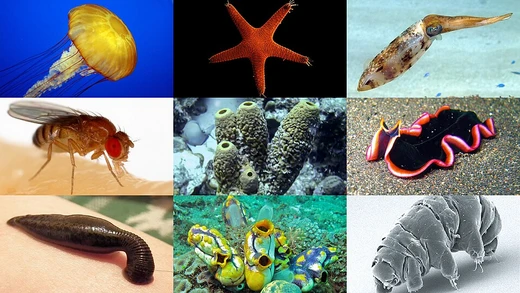
Aphid
Small sap-sucking insects with rapid asexual reproduction and telescoping generations.

DimiTalen · CC0
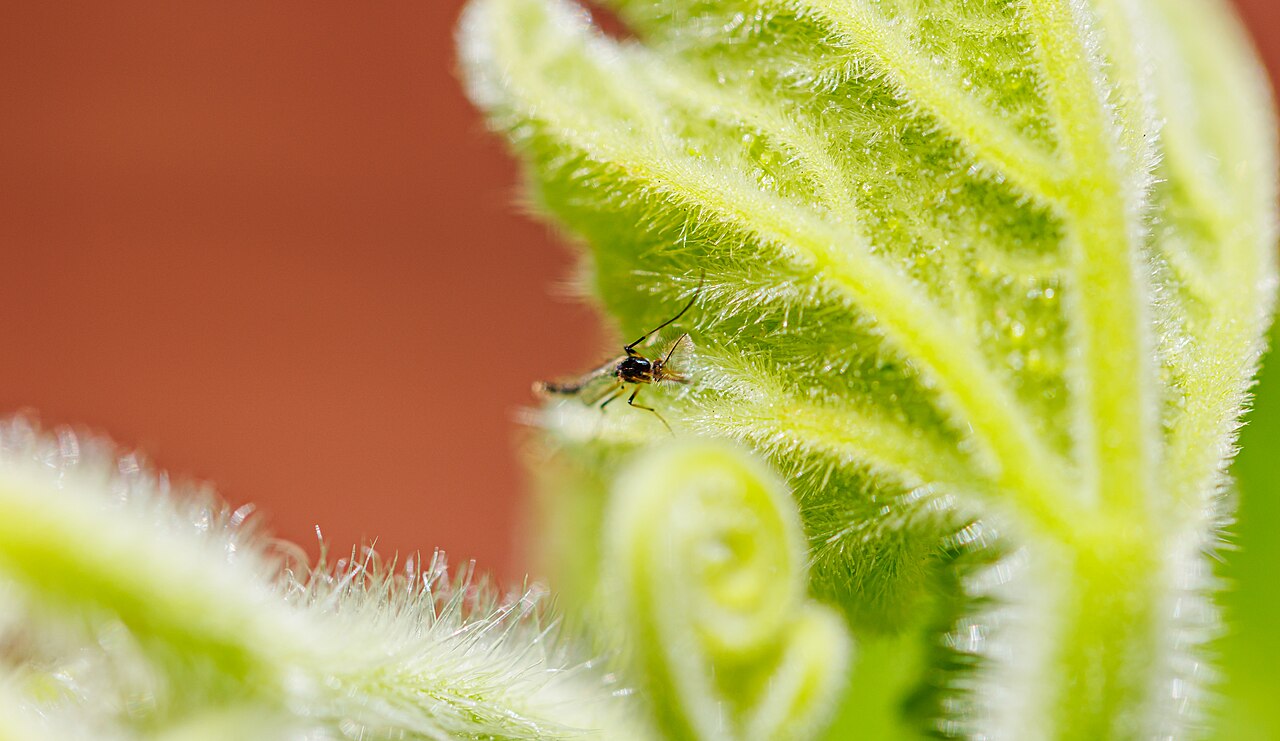
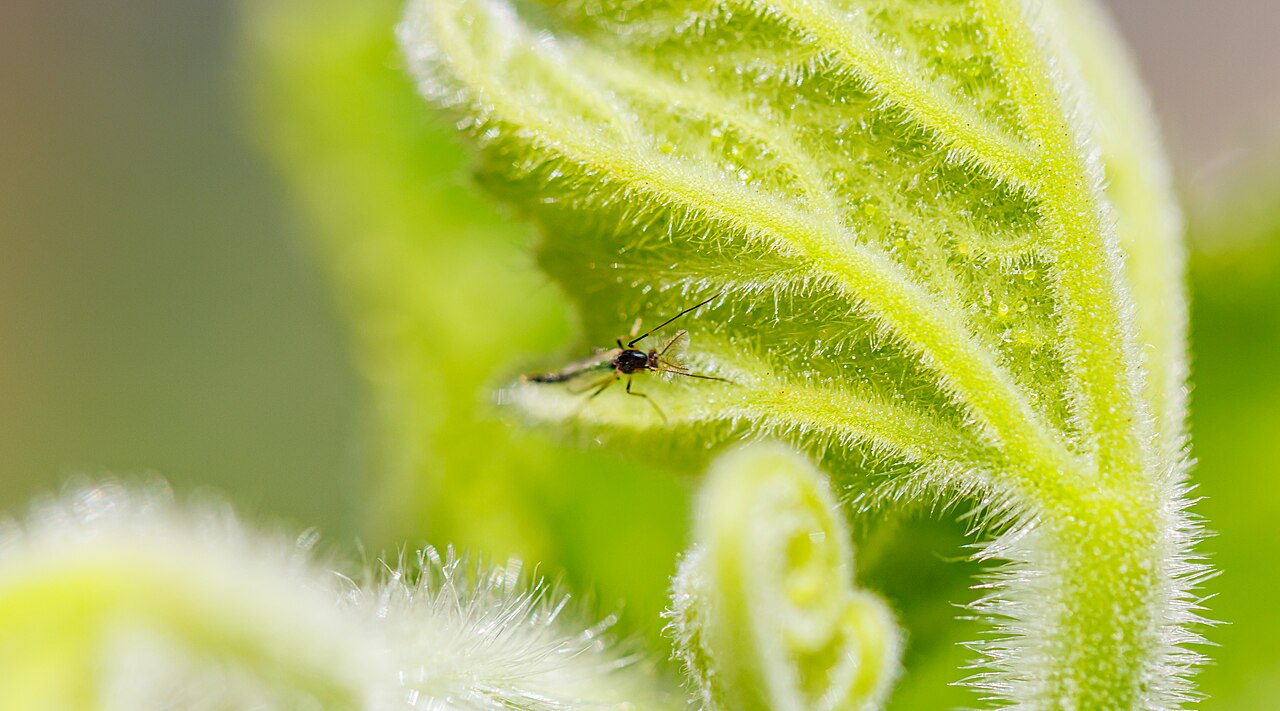
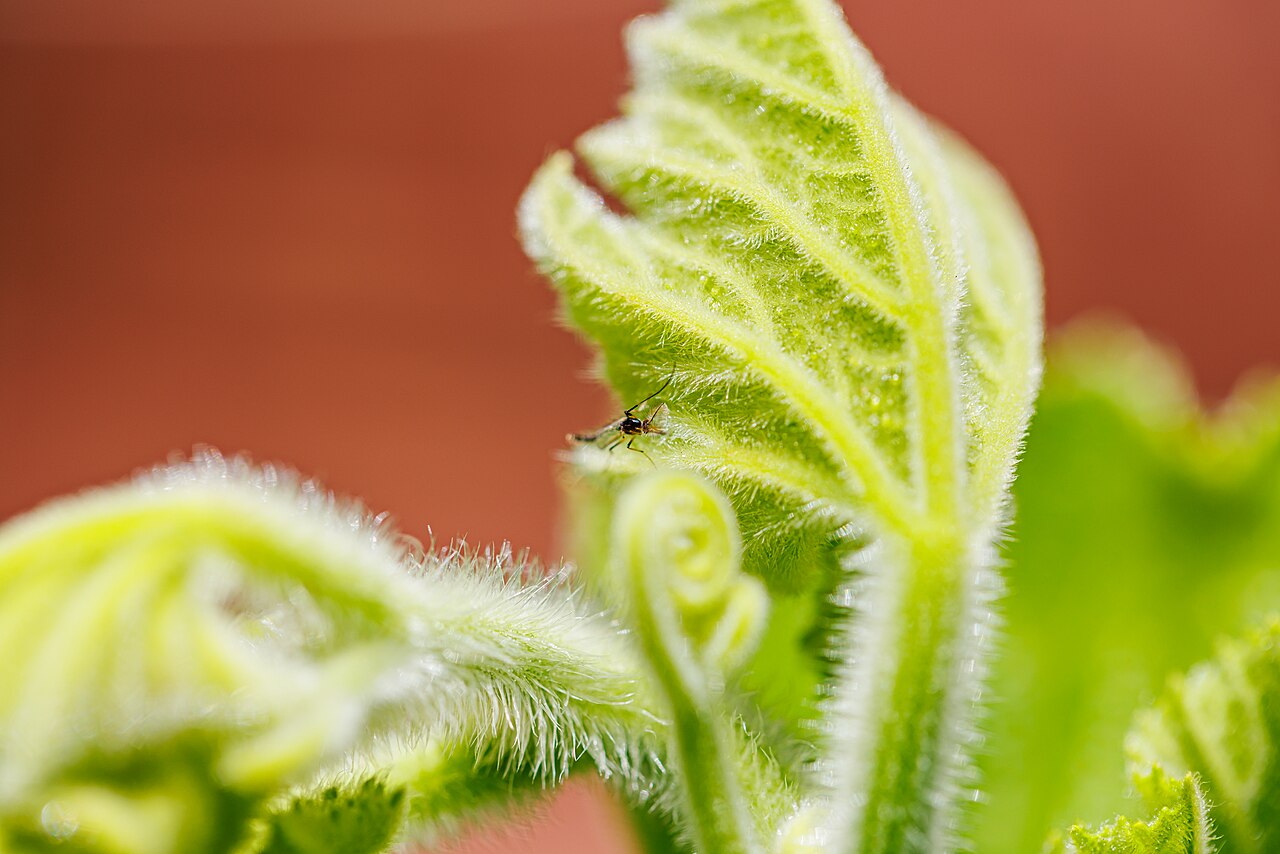
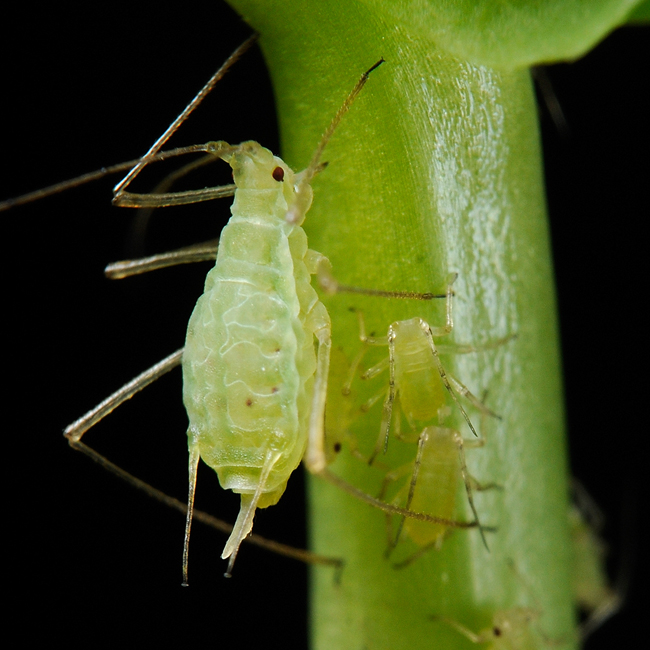
Aphids are small sap-sucking insects in the family Aphididae of the order Hemiptera. Common names include greenfly and blackfly, although individuals within a species can vary widely in color. The group includes the fluffy white woolly aphids. A typical life cycle involves flightless females giving live birth to female nymphs—who may also be already pregnant, an adaptation scientists call telescoping generations—without the involvement of males. Maturing rapidly, females breed profusely so that the number of these insects multiplies quickly. Winged females may develop later in the season, allowing the insects to colonize new plants. In temperate regions, a phase of sexual reproduction occurs in the autumn, with the insects often overwintering as eggs. Aphids are among the most destructive insect pests on cultivated plants in temperate regions, weakening plants by sucking sap, acting as vectors for plant viruses, and disfiguring ornamental plants with honeydew and sooty moulds.
- field
- Entomology
- known_for
- Destructive sap-sucking pests, telescoping generations, mutualism with dairying ants
- species_described
- About 5,000
- earliest_fossil
- Triassoaphis cubitus from the Triassic
- distribution
- Worldwide, most common in temperate zones
Lore & Background
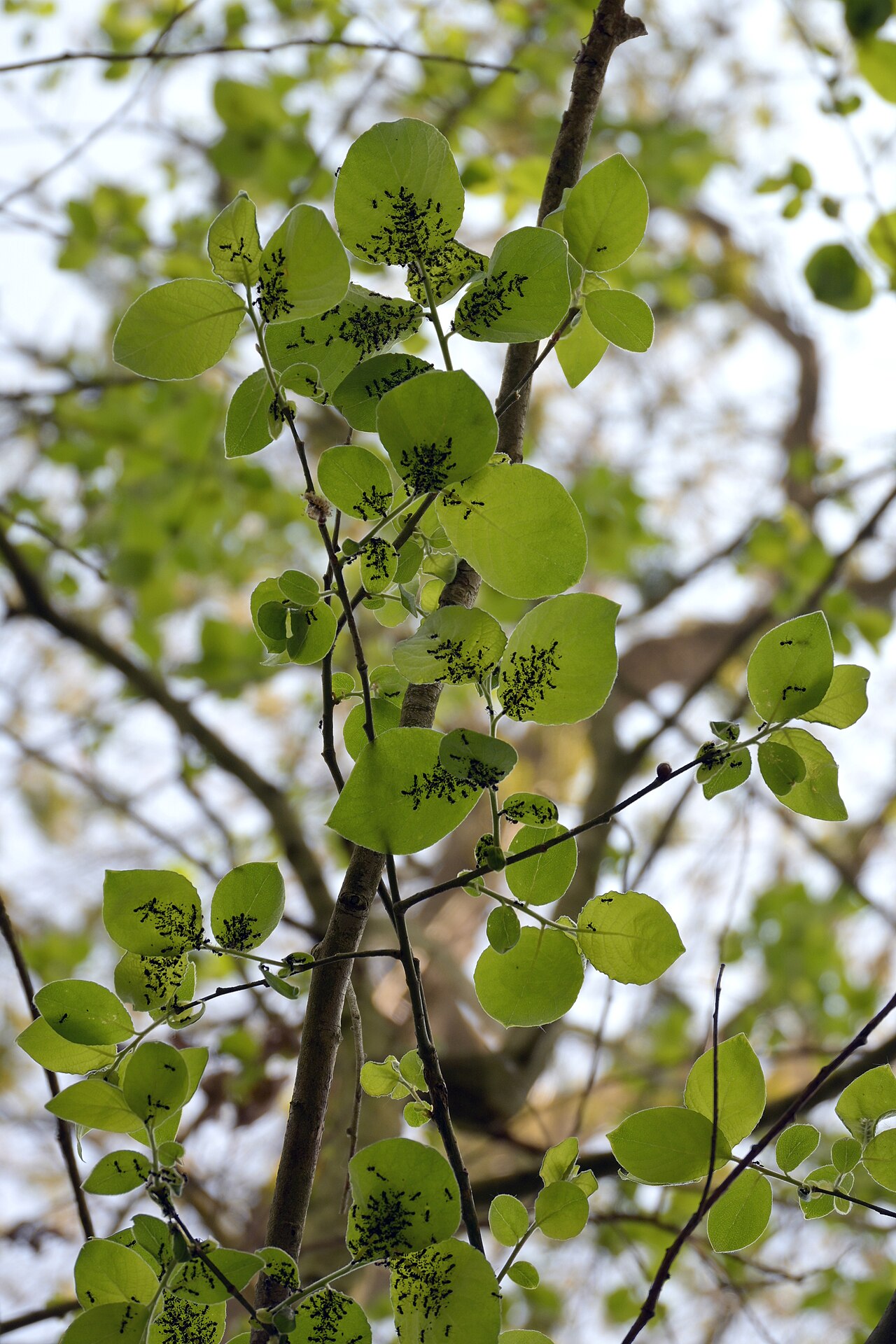
Aphids have a typical life cycle involving flightless females that give live birth to female nymphs, who may already be pregnant—an adaptation called telescoping generations. Maturing rapidly, females breed profusely, causing numbers to multiply quickly. Winged females may develop later in the season, enabling colonization of new plants. In temperate regions, a phase of sexual reproduction occurs in autumn, with insects often overwintering as eggs. Some species alternate between two host plant species, while others feed on only one type or are generalists. About 400 of the 5,000 described species are found on food and fiber crops, and many are serious pests of agriculture and forestry, as well as an annoyance for gardeners. So-called dairying ants have a mutualistic relationship with aphids, tending them for their honeydew and protecting them from predators.
Reader's Guide
Aphids are among the most destructive insect pests on cultivated plants in temperate regions. In addition to weakening plants by sucking sap, they act as vectors for plant viruses and disfigure ornamental plants with deposits of honeydew and subsequent growth of sooty moulds. Because of their ability to rapidly increase in numbers by asexual reproduction and telescopic development, they are a highly successful group of organisms from an ecological standpoint. Large-scale control is not easy; insecticides do not always produce reliable results due to resistance and because aphids often feed on the undersides of leaves. On a small scale, water jets and soap sprays are effective. Natural enemies include predatory ladybugs, hoverfly larvae, parasitic wasps, aphid midge larvae, crab spiders, lacewing larvae, and entomopathogenic fungi. Integrated pest management using biological control can work but is difficult except in enclosed environments such as greenhouses. The name 'aphid' is from Carl Linnaeus's modern Latin, likely from misreading the Middle Greek κόρῐς (koris, 'bug') as αφῐς (aphis).
Did You Know?
- Aphids can give live birth to female nymphs that may already be pregnant, an adaptation called telescoping generations.
- So-called dairying ants have a mutualistic relationship with aphids, tending them for their honeydew and protecting them from predators.
- The oldest known aphid fossil is Triassoaphis cubitus from the Triassic period.
- Aphids are distributed worldwide but are most common in temperate zones, with species diversity much lower in the tropics.
The Reproductive Engine: Telescoping Generations
Aphids belong to the family Aphididae within the order Hemiptera, and they are perhaps best known for their extraordinary reproductive strategy. Rather than laying eggs, flightless females produce live young—female nymphs that may themselves already carry developing offspring. This nested, overlapping pattern of development, which scientists term "telescoping generations," means that multiple life stages can coexist within a single lineage almost simultaneously. No males are required during this asexual phase, and the females mature so rapidly and breed so prolifically that populations can explode in a matter of weeks. Later in the growing season, winged females appear, enabling the colony to spread to fresh host plants. In temperate climates, the cycle shifts to sexual reproduction in autumn, and the insects survive the winter as eggs. Some species also alternate between two entirely different host plants—perhaps an annual crop and a woody shrub—while others are generalists that will colonize a wide range of plant families. This flexibility in both reproduction and host use underpins their ecological success.
Agricultural Menace and Ecological Success
With roughly 5,000 described species in the family Aphididae, these tiny sap-suckers occupy a paradoxical niche: they are simultaneously a devastating agricultural threat and a remarkably successful ecological group. Around 400 species are found feeding on food and fiber crops, making them serious pests of both agriculture and forestry, as well as a persistent nuisance for home gardeners. Their damage extends well beyond simple sap extraction. Aphids transmit plant viruses from one host to another, and the sugary honeydew they excrete creates a substrate on which sooty moulds thrive, disfiguring ornamental plants. Their ability to multiply exponentially through asexual reproduction and telescoping development means that a small founding population can become an overwhelming infestation within days. Interestingly, their honeydew also sustains a mutualistic partnership with so-called dairying ants, which tend aphid colonies and defend them from predators in exchange for the sweet secretion. Despite their ecological success, controlling them at scale remains stubbornly difficult.
Deep Time: Fossils and Evolutionary Origins
The lineage that would become aphids, along with their close relatives the adelgids and phylloxerans, traces back to a common ancestor roughly 280 million years ago in the Early Permian, when they likely fed on ancient plant groups such as Cordaitales or Cycadophyta. Because their soft bodies resist fossilization, the record is sparse; the oldest identified species, Triassoaphis cubitus, comes from the Triassic. However, aphids occasionally become trapped in plant exudates that harden into amber, preserving them in remarkable detail. By the time Professor Ole Heie published his 1967 monograph, approximately sixty fossil species had been described across the Triassic, Jurassic, Cretaceous, and Tertiary, with Baltic amber alone contributing another forty. A major diversification wave coincided with the rise of angiosperms around 160 million years ago, as aphids began specializing on specific flowering-plant hosts. Distinctive features like the cornicles did not appear until the Cretaceous, and the Phylloxeridae may represent the oldest surviving family, though their fossil evidence is limited to the Lower Miocene.
Global Reach and the Challenge of Control
Aphids are found on every continent, yet their species diversity is markedly higher in temperate zones than in the tropics—a pattern that sets them apart from many other insect groups. They travel vast distances primarily through passive wind dispersal; winged individuals can ascend to altitudes of around 600 meters, where strong currents carry them far from their origin. One documented case involves the currant-lettuce aphid, Nasonovia ribisnigri, which is believed to have crossed from New Zealand to Tasmania around 2004 riding easterly winds. Human activity compounds natural dispersal, as infested plant material transported across borders has rendered some species nearly cosmopolitan. Managing aphid outbreaks at scale is notoriously difficult. Insecticides often fail due to built-up resistance to multiple chemical classes and because the insects shelter on the undersides of leaves, shielded from spray. On smaller scales, water jets and soap sprays prove effective, and a rich cast of natural enemies—ladybugs, hoverfly larvae, parasitic wasps, lacewing larvae, crab spiders, aphid midge larvae, and entomopathogenic fungi—offers biological alternatives. Integrated pest management can succeed, though it is most reliably achieved in enclosed settings like greenhouses.
Gallery
Frequently Asked Questions
What exactly is an aphid?
Aphids are tiny sap-feeding insects belonging to the family Aphididae within the order Hemiptera. They go by several common names—greenfly, blackfly, or woolly aphid depending on the species—and are found across the globe, though they're most abundant in temperate regions.
How do aphids reproduce so quickly?
Most aphid females give live birth to daughter nymphs without any male involvement, and those daughters can already be carrying their own offspring—a phenomenon researchers call telescoping generations. This asexual strategy allows populations to explode in number within just a few generations.
What's the deal with aphids and ants?
Aphids and certain ant species share a mutualistic relationship often nicknamed dairying, where ants tend to aphid colonies in exchange for the sugary honeydew the aphids excrete. The ants essentially farm the aphids much like livestock, protecting them from predators while harvesting their secretions.
How far back do aphids go in the fossil record?
The earliest known aphid fossil is Triassoaphis cubitus, dating to the Triassic period, which pushes their lineage back well over 200 million years. Roughly 5,000 distinct aphid species have been formally described to date.
Why are aphids considered such a serious pest?
By piercing plant tissue and draining sap, aphids weaken crops and ornamental plants, often spreading viral diseases in the process. Their rapid asexual multiplication means a single founding female can build up a damaging colony before any natural predators catch up.
More in Invertebrates 1-24
Elsewhere in the Invertebrates universe
Spotted an error? Know more?
This is a living reference — every entry is fact-audited, and reader corrections feed straight into our audit queue. Suggest an edit · See this site's audit record