Crayfish
Freshwater crustaceans that are opportunistic omnivorous scavengers.

Sunday Glory · CC BY-SA 4.0
Crayfish, also known as crawfish or crawdads, are freshwater crustaceans belonging to the infraorder Astacidea, which also includes lobsters. They are taxonomically members of the superfamilies Astacoidea and Parastacoidea, breathe through feather-like gills, and are found in a variety of freshwater habitats such as brooks, streams, swamps, ditches, and paddy fields. Most species cannot tolerate polluted water, though some, like Procambarus clarkii, are hardier. Crayfish are opportunistic omnivorous scavengers that feed on animals and plants, either living or decomposing, as well as detritus.
- field
- Astacology (study of crayfish)
- known_for
- Freshwater crustaceans, detritivores, and a key part of Cajun culture in Louisiana
- largest_species
- Tasmanian giant freshwater crayfish (Astacopsis gouldi), over 5 kg
Lore & Background
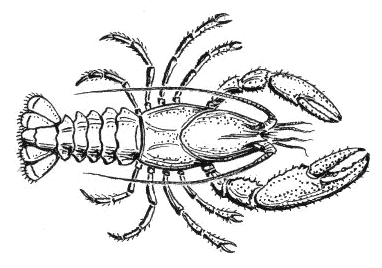
The name 'crayfish' derives from the Old French word escrevisse, modified by folk etymology due to association with 'fish'. The American variant 'crawfish' is similarly derived. In different regions, they are known as lobsters, crawdads, mudbugs, yabbies, and other local names. The study of crayfish is called astacology. Crayfish have a body made up of nineteen segments (5 cephalic, 8 thoracic, 6 abdominal; the telson is not a segment) grouped into a cephalothorax and abdomen, with the first pair of legs (chelipeds) ending in large claws, while the walking legs (pereiopods) in many species have small chelae on the first pair or two. Their size varies by species; many common species average 5–12 cm (2–5 in) in length, though larger species can reach up to 17.5 cm (6.9 in) or more. Their diet consists largely of detritus and fine particulate organic matter, though they are generalist feeders and can be lured with baits such as dog biscuits, fish heads, and meat. They are coprophagic, eating their own feces, and also consume their own moulted carapace and each other. Three extant families of crayfish are described: two in the Northern Hemisphere (Astacidae, Cambaridae) and one in the Southern Hemisphere (Parastacidae).
Reader's Guide
Crayfish hold significance as both ecological and cultural icons. Ecologically, they are benthic dwellers that process detritus and fine particulate organic matter at the sediment-water interface, playing a role in nutrient cycling. Their feeding behavior, which includes rapid ingestion and selective processing of material, exposes them to predation risk, shaping their habits of eating, hiding, and processing waste in consistent locations. The complexity of their diet was noted as early as T.H. This has spawned cottage industries producing crayfish-themed merchandise such as plaques, T-shirts, and jewelry. In Australia, species like the common yabby, marron, and red-claw crayfish are important for aquaculture. The marron species Cherax tenuimanus is critically endangered, highlighting conservation concerns for some large Australasian crayfish.
Did You Know?
- The name 'crayfish' comes from the Old French word escrevisse, modified by folk etymology due to association with 'fish'.
- Crayfish are coprophagic, eating their own feces, and also consume their own moulted carapace and each other.
- The Tasmanian giant freshwater crayfish can achieve a mass over 5 kg (11 lb).
Origins and Distinctive Appearance
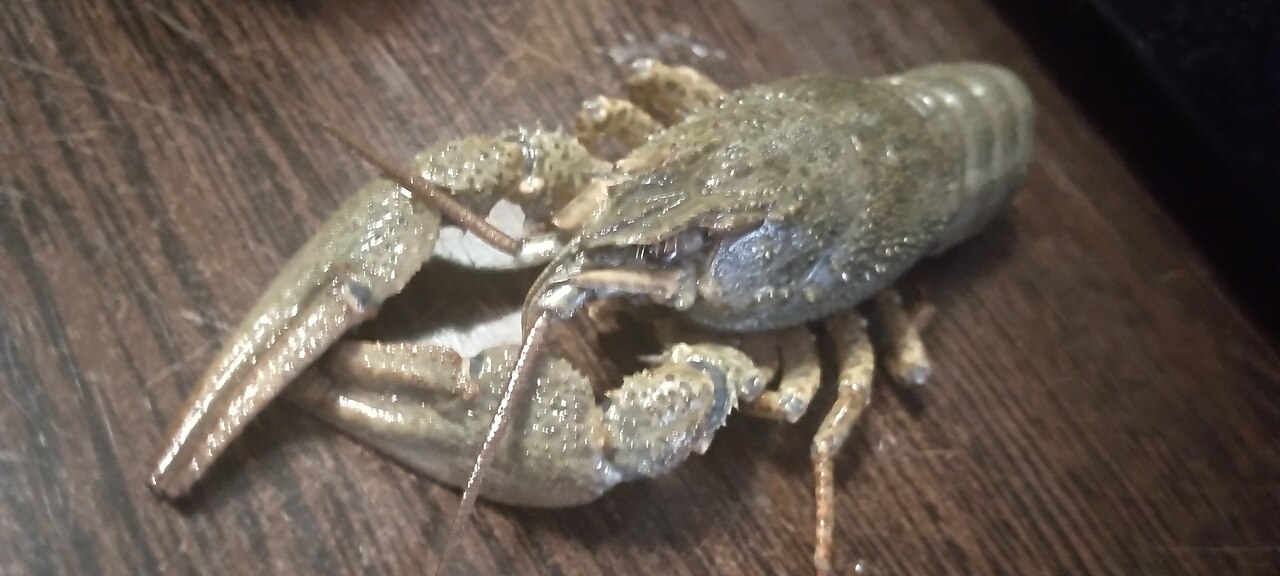
The signal crayfish traces its roots to the Columbia River Basin, a stretch of western North America spanning British Columbia, Washington, Oregon, and Idaho. Adults typically measure between six and nine centimeters in length, though exceptional specimens can reach sixteen to twenty centimeters. At a carapace length of fifty millimeters, an individual weighs roughly sixty grams, climbing to about one hundred and ten grams at seventy millimeters. The dorsal surface is most often brown, yet the species displays a surprising palette that can shift from vivid red to cool blue. What truly sets this crayfish apart is the smooth texture of its carapace and claws, combined with a striking white or pale blue-green patch positioned at the base of the claw joint. That luminous spot is the source of the common name: it evokes the small white flags once waved by railway signalmen to direct the movement of trains. Another useful field mark is the absence of a row of spines along the shoulders of the carapace, a feature that separates it from the European noble crayfish, with which it is frequently confused.
The Well-Intentioned Introduction and the Plague Paradox
Beginning in 1907, a devastating water mold called Aphanomyces astaci — the agent of crayfish plague — started wiping out populations of the native noble crayfish across European waterways. Desperate to restore both ecological function and a valued food source, Sweden and Finland deliberately brought in the signal crayfish during the 1960s, reasoning that it filled a comparable ecological and culinary niche. The fatal oversight was that no one at the time recognized that North American crayfish species routinely harbor the plague pathogen without showing symptoms. While the signal crayfish itself enjoys a degree of immunity, the infection is lethal to European natives. The result was a cruel irony: the species imported as a savior became the very vector that kept the plague circulating through European freshwater systems, continuing to decimate the populations it was meant to replace. By 2009 the signal crayfish had established itself in twenty-seven European countries and regions, stretching from Finland to Great Britain and from Spain to Greece, cementing its status as the continent's most widespread invasive freshwater crayfish.
Ecological Dominance and Competitive Edge
The signal crayfish's rapid conquest of new territories is often explained through the Enemy Release Hypothesis: upon entering a foreign range, it sheds roughly seventy-five percent of the parasites and predators that keep it in check back home. Freed from those natural constraints, the species can direct more energy toward growth, reproduction, and territorial defense. It also exhibits a notably higher level of aggression than other established invasive crayfish such as the spiny-cheek crayfish, giving it a decisive edge in head-to-head encounters with native competitors. Coupled with an opportunistic, polytrophic diet that lets it exploit a wide array of food sources, these traits make it extraordinarily difficult for indigenous species to hold ground. In the Iberian Peninsula, field observations show that native fish dominate interactions with adult signal crayfish in only four percent of encounters, compared with twenty-five percent when the crayfish are juveniles. The Pyrenean stone loach, a small native fish, manages to prevail in half of juvenile encounters but must mount an evasion response in over thirty percent of meetings with adults. Across North America, Europe, and Japan, the pattern repeats: native crayfish and fish communities are steadily displaced.
Regulation, Mitigation, and the Ongoing Struggle
The European Union formally designated the signal crayfish as an Invasive Alien Species of Union concern in 2016, a classification that bans its import, breeding, transport, commercial sale, and deliberate release anywhere within EU borders. For anglers across the continent, the species has become a persistent nuisance, outcompeting the native crayfish they originally sought to catch. Mitigation research has explored a spectrum of approaches, from relatively gentle upstream barriers designed to block crayfish movement without impeding fish migration, to far more aggressive tactics such as draining waterways, applying biocides, electrocuting streams, deploying extensive trapping programs, and introducing predatory fish. Among these, outright eradication has proven the most effective, though it carries the risk of collateral damage to the surrounding ecosystem. In California, conservationists are working to construct a physical barrier to protect the Shasta crayfish, the last native crayfish remaining in the state outside a single subspecies of the signal crayfish itself. Despite its invasive notoriety, the species is listed as least concern on the IUCN Red List, a reflection of its broad native range in the Columbia River Basin rather than any diminished threat.
Gallery



Frequently Asked Questions
Who is Crayfish?
Crayfish (also called crawfish or crawdads) are freshwater crustaceans in the infraorder Astacidea, making them close relatives of true lobsters. They occupy a range of freshwater settings from brooks and streams to swamps, ditches, and rice paddies.
What are Crayfish's powers/role?
They act as opportunistic omnivorous scavengers, consuming living or decomposing animal and plant material as well as detritus. Their feather-like gills let them pull oxygen directly out of freshwater, and their detritivore work keeps nutrient cycles running in their habitats.
How does Crayfish's story end?
Most species are highly sensitive to water pollution and will disappear from degraded habitats, though hardier members like Procambarus clarkii can tolerate lower-quality water. Rather than a single dramatic finale, their story is an ongoing cycle of reproduction and repopulation in healthy freshwater systems.
Why is Crayfish important?
They are a keystone detritivore in freshwater food webs and a cultural cornerstone of Cajun cuisine in Louisiana. The group also includes the Tasmanian giant freshwater crayfish (Astacopsis gouldi), which can top five kilograms, highlighting just how diverse the lineage is.
What's the biggest Crayfish?
The Tasmanian giant freshwater crayfish, Astacopsis gouldi, holds the record as the largest species in the group, regularly exceeding five kilograms in mass. It is a member of the Parastacoidea superfamily and lives in the freshwater streams of Tasmania.
More in Invertebrates 25-40
Elsewhere in the Invertebrates universe
Spotted an error? Know more?
This is a living reference — every entry is fact-audited, and reader corrections feed straight into our audit queue. Suggest an edit · See this site's audit record